
A free morning at Porton Down on 5 November on what tariffs and new EU rules cost fashion sellers. Hampshire shops and brands are invited; book on Eventbrite.
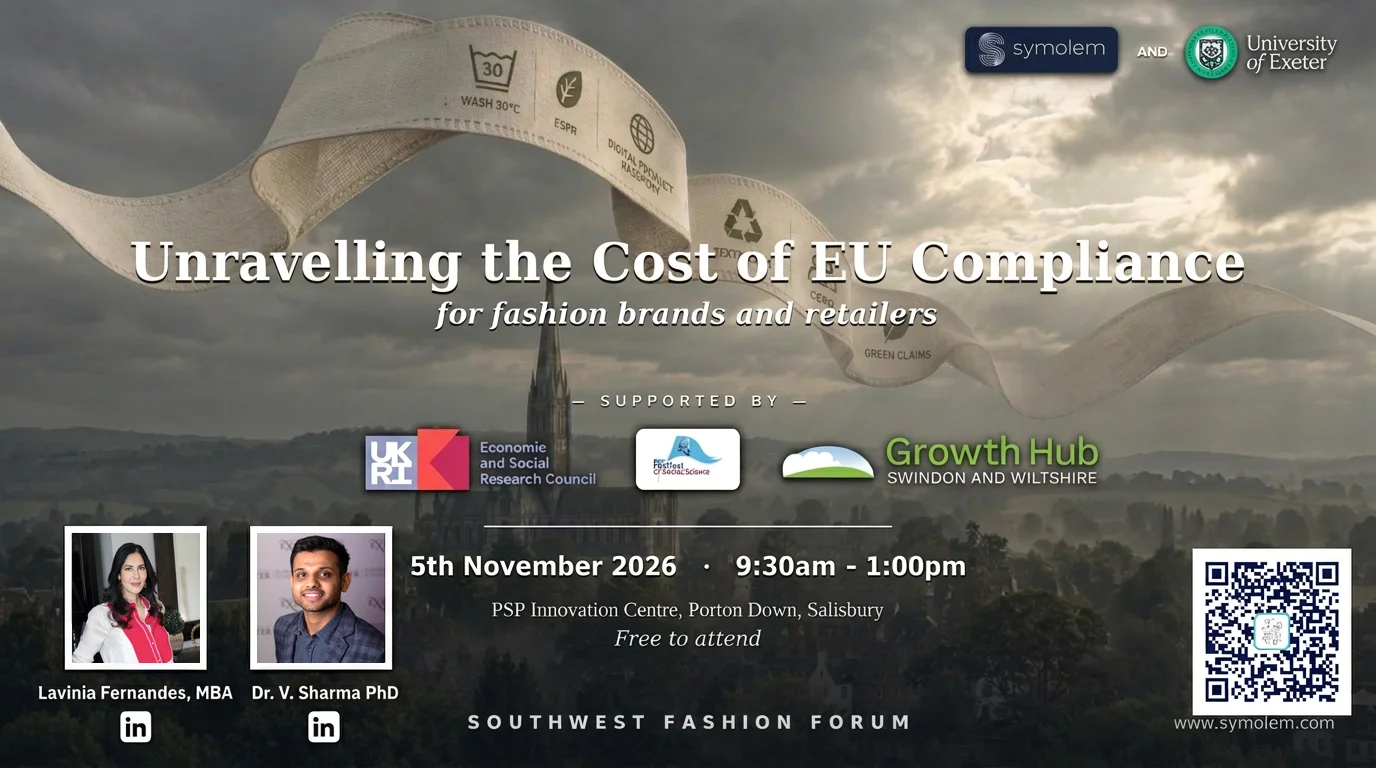
Independent shops, fashion brands and packaging firms in Hampshire are invited to a free morning conference on Thursday 5 November about what tariffs and new European product rules now cost them. The inaugural Southwest Fashion Forum runs from 9:30am to 1pm at the PSP Innovation Centre on Porton Science Park, outside Salisbury, and is open to businesses across Dorset, Wiltshire, Cornwall, Devon, Somerset and Hampshire. (Symolem, Southwest Fashion Forum)
Its title is “Unravelling the Cost of EU Compliance for fashion brands and retailers”. It is part of the ESRC Festival of Social Science 2026, run by UK Research and Innovation, and is hosted by Symolem, a sustainability advisory based at Porton Science Park, with the University of Exeter. The academic lead is Dr Vinayak Sharma. Swindon and Wiltshire Growth Hub supports it and is taking the bookings, and the release adds support from Salisbury & District Chamber of Commerce and Industry. The Forum is paid for by a Festival award through the University of Exeter.
Places are free but limited, and booking is on Eventbrite.
Why the organisers say it is needed
Symolem’s founder, Lavinia Fernandes, wrote to us with the release. In it she says:
“Independent retailers are being hit by tariffs on one side and compliance evidence on the other, and where you source your brands decides how much of each you carry. The conference is a chance to hear from the lawyers and brand compliance teams who are already dealing with it, and to understand the real cost before it lands.”

The idea for the day, the release says, came from a South West boutique owner who told Ms Fernandes she had stopped shipping to EU customers from her online shop because the paperwork had become too expensive. Symolem turned that into a case study for the University of Exeter’s One Planet MBA, written with Dr Sharma, which asked students whether a UK brand should expand into Europe or stay at home, and to back the answer with a full dataset on the cost.
The release sets out the two pressures. Tariffs and shifting trade rules raise the cost of moving goods across borders, while European rules on product design, green claims and packaging ask a business to prove where its products come from and how they are made. “For micro and small businesses that depend on access to the EU market,” it says, “much of that evidence is difficult to collect alone, and the cost can decide whether a line is worth importing or exporting at all.”
Dr Sharma says:
“This event shows how university research can help regional businesses with a practical problem. We want attendees to leave with a clearer view of what compliance will cost them and what to do next.”

The event page describes him as Academic in Residence at the University of Exeter, where he lectures in the Department of Management, with a PhD in circular economy from the university, and says he has advised Defra, the Ellen MacArthur Foundation and NHS England.
What happens on the morning
Symolem’s event page gives this running order, and says it is still subject to confirmation. The release says the speakers will include lawyers and product compliance specialists from leading UK brands, with a live demonstration of a Digital Product Passport platform and responses to the case study from One Planet MBA student teams. The names of the opening speaker and the panellists have not been published yet.
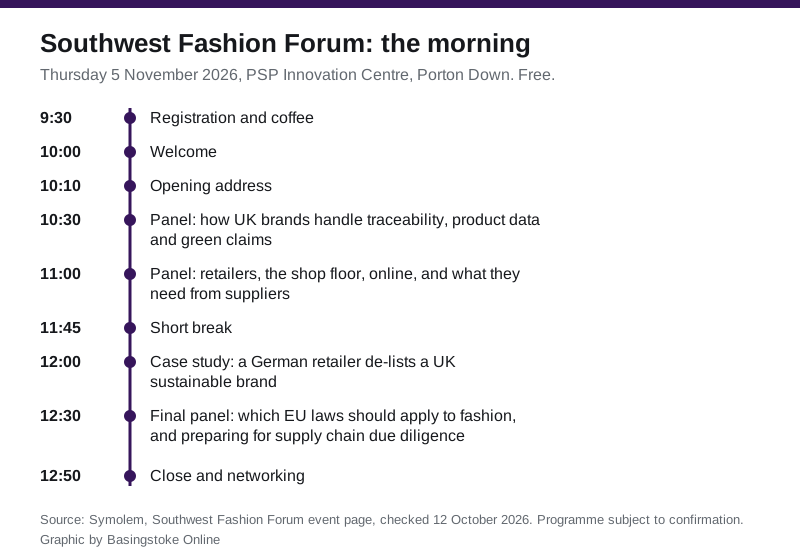
- 9:30 registration and coffee
- 10:00 welcome, then an opening address at 10:10
- 10:30 panel: how UK brands are tackling traceability, product data and green claims
- 11:00 panel: what changes for retailers on the shop floor and online, and what they need from suppliers
- 11:45 short break
- 12:00 case study: a German retailer decides to de-list a UK sustainable brand
- 12:30 final panel on which EU laws should apply to fashion and how to prepare for supply chain due diligence, with product compliance experts, law firms and consultants
- 12:50 close and networking
The costs the organisers set out
The release carries a briefing on what trading now costs a fashion business. These are Symolem’s figures, which it says it checked on 12 October 2026, and it warns that duty rates vary by product, so each business should confirm its own commodity codes. (Southwest Fashion Forum press release, one-page version, PDF)
- Selling to the EU: clothing goes in at a zero tariff under the UK-EU Trade and Cooperation Agreement if its origin is shown. Without that, the release says, the EU’s standard duty applies, 12% on many garments.
- Selling to the USA: a 10% tariff applies to most UK goods under Section 301, in force since 24 July 2026, on top of the normal US duty for the product. The $800 duty-free threshold ended on 29 August 2025, so low-value parcels now pay duty.
- UK Plastic Packaging Tax: £228.82 a tonne from 1 April 2026 (previously £223.69) on plastic packaging with under 30% recycled content, with registration required once a business makes or imports 10 tonnes in 12 months.
- UK packaging producer fees: base fees in 2025 to 2026 were £423 a tonne for plastic and £196 a tonne for paper and card. Larger producers (turnover of £2m or more, or over 50 tonnes) pay; smaller ones (£1m or more, or over 25 tonnes) report.
- EU packaging rules: from 12 August 2026, non-EU companies shipping straight to EU consumers must appoint an authorised representative, with no general exemption for micro or small businesses.
- EU green claims: from 27 September 2026, generic claims such as “eco-friendly” and “climate neutral” are banned, and importers and own-label retailers answer for claims they repeat from suppliers.
- Unsold stock: since 19 July 2026, large companies may not destroy unsold clothing and footwear under the EU’s ecodesign rules. Medium-sized companies follow in 2030.
Who runs Symolem
Symolem was founded in 2022 and is based at Porton Down Science Park. Ms Fernandes says it helps fashion brands and retailers prepare for EU and UK product, green claims and traceability rules, and builds Digital Product Passport technology, a digital record that shows where a product comes from and how it was made.
In her email she says she spent around twenty years in fashion, as a model and then in wholesale and e-commerce, and in 2019 founded Blu-Label, which she describes as one of the UK’s first Digital Product Passport companies. She says she holds a seat on the UN/CEFACT Supply Chain Working Group for the UN Transparency Protocol, the group drafting standards for Digital Product Passports, is Vice-Chair of the Landfills2Landmarks Foundation, and will attend COP31 in Antalya in November.
What it means for you
If you run a clothing, footwear or accessories shop or brand in Basingstoke, or make its packaging, and you sell into Europe or the US or buy stock from abroad, this is a free morning with the people dealing with the rules first hand.
- When: Thursday 5 November 2026, 9:30am to 1pm
- Where: PSP Innovation Centre (The Lyle Building), Porton Science Park, Bybrook Road, Porton Down, Salisbury SP4 0BF. The Eventbrite listing says parking is free; the nearest station is Salisbury.
- Cost: free, places limited. Book on Eventbrite or through symolem.com.
- Food: coffee on arrival, but no lunch. The release says a light lunch can be arranged at Roche Court, five minutes’ drive away.
- Aimed at: independent retailers, multi-brand boutiques and department stores, packaging companies, brand founders and directors, buying, sourcing and compliance teams, and sustainability leads.
Symolem is also looking for sponsors for the Forum, with speaking and branding opportunities.
For more from Basingstoke, see what’s on this month.
Have your say