
Update: Cabinet approved the South Ham and Buckskin regeneration lettings framework on 8 September. No outcome is yet published on the CPO motion.
Update, 11 September 2026: Cabinet approved the regeneration lettings changes (item 10) on 8 September. The decision can be called in until 16 September. (Cabinet decision) The printed decisions list records no outcome for the CPO motion (item 6). We will report it from the minutes. (Cabinet, 8 September 2026)
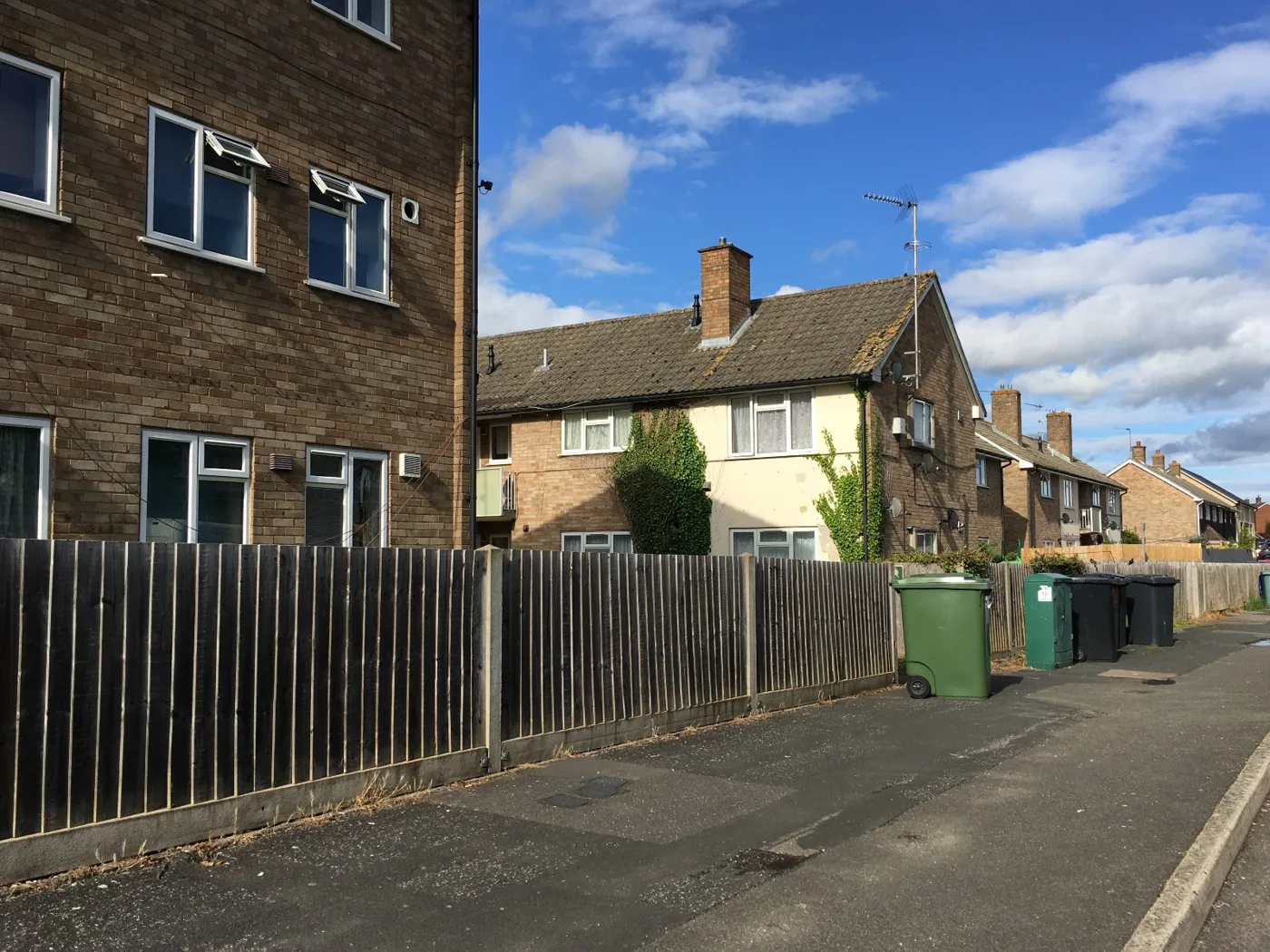
Basingstoke and Deane’s Cabinet meets on Tuesday 8 September with two items on its agenda about the same two estates. Together they decide how far the council will go to protect people who own their homes in South Ham and Buckskin, and how quickly it will move the people who rent.
Councillors are being asked to state plainly that the council does not support compulsory purchase orders to force owner-occupiers out of their homes in regeneration areas, other than in the most exceptional circumstances.
Separately, they are asked to approve a change that would let housing association tenants in those estates claim top priority for a new home before a planning application has been approved. That has never been possible before. The change comes with a cap: no more than 30 such awards for any one scheme in a 12-month period.
Neither the Buckskin and South Ham scheme nor the Winklebury scheme has planning consent yet.
What is actually on the agenda
Both items are on the published agenda for the 8 September Cabinet meeting.
- Item 6 is a motion referred by Full Council on 16 July, asking Cabinet to set out a position on compulsory purchase.
- Item 10 is a report recommending a change to the Housing Allocations Scheme, so that tenants who have to move for regeneration get top priority sooner.
The meeting starts at 6.30pm in Committee Rooms 1 and 2 at the Deanes. It is webcast live, and members of the public can speak on any item if they tell Democratic Services beforehand.
The compulsory purchase motion
The motion was proposed by Cllr Sean Dillow and seconded by Cllr Val Elliott. Council passed it on 16 July and referred it to Cabinet without alteration, which the council’s own update paper for that meeting records as “no update, as set out on the agenda”.
Council asks Cabinet to do four things:
- State clearly that the council does not support using compulsory purchase orders to force owner-occupiers from their homes in regeneration areas, including South Ham and Buckskin, except in the most exceptional circumstances where all reasonable alternatives have been demonstrably exhausted.
- Ask the Leader to bring forward a formal policy commitment embedding that principle in the council’s regeneration approach.
- Affirm that any future proposal to use compulsory purchase powers in South Ham and Buckskin must first go to the South Ham and Buckskin Overview and Scrutiny Committee, which must satisfy itself that alternatives have been exhausted, that residents have had independent advice on protections and compensation, and that the legal, financial, social and community impacts have been publicly reported.
- Publicly communicate the agreed position to housing associations, to borough and county councillors, and to residents in the regeneration areas, homeowners and tenants alike.
The motion also asks the Leader to write to the Secretary of State, local MPs and the Local Government Association seeking a change in national law. It wants a statutory right of “Equivalence”, so that anyone displaced by compulsory purchase for regeneration receives enough compensation to buy a comparable home of equivalent size, tenure and standard in their own community, with legal, moving and professional costs covered.
In its reasoning, Council recorded that residents have “repeatedly expressed serious concern, distress and uncertainty”, that the issue was formally raised at Full Council as long ago as 15 May 2025, and that the delay has left people in “an unacceptable state of limbo” over decisions about their homes, finances, retirement plans and family circumstances.
That committee, incidentally, does exist. The South Ham and Buckskin Regeneration Committee next meets on 12 November 2026.
The rehousing change, and the parts the press release leaves out
The council announced the second item on 28 August. Cllr Laura James, Cabinet Member for Residents’ Services and Housing, said one of the clearest messages from people living in regeneration areas is “that they do not want to be left in limbo”.
The report itself carries several things the announcement does not.
What changes. Under the Regeneration Addendum adopted in 2022, a tenant whose landlord tells them their home will be demolished goes into Band 2 on the housing register. They only reach Band 1, the top priority band, once planning permission for the whole regeneration has been granted and the phasing requires them to move. The proposal removes that planning trigger where an earlier move is “demonstrably necessary” to kick-start a scheme.
Why now. In February 2026, SNG confirmed it had identified the Park View Primary School end of Pinkerton Road as a priority area for possible redevelopment, and is already talking to tenants there about needing to move. That is what prompted officers to revisit the 2022 policy.
Nothing has happened under the old policy. The report states that no addendum moves and no Band 1 priorities have been awarded to date, because neither Winklebury, which VIVID is progressing, nor Buckskin and South Ham, which SNG is progressing, has reached planning consent.
The cap, which is the part residents on the register should read. The proposed framework sets a general approach of no more than 30 priority awards for a regeneration scheme in any 12-month period, and says that at least 75% of the priority cases in each phase should be rehoused before further awards are considered. Exceptions can be made by the Head of Housing and Homelessness.
The condition on the landlords. Before priority is awarded to its tenants, a registered provider has to show how it will replace the demolished affordable housing “to at least an equivalent quantity, quality and tenure-type”, through its pipeline and the redeveloped site. It also has to submit hard numbers: the properties in each phase by street name, the demolition timetable, its own pipeline for the next 12 to 24 months, and its advertised lettings over the preceding 24 months.
The exceptions regeneration tenants already have
The 2022 addendum already gives tenants moving for regeneration a set of advantages over everyone else on the register. The report lists them in full. They include:
- The two-year local connection test does not apply.
- The income and savings limits do not apply. Other applicants are disqualified by a household income of £50,000 or by savings and assets over £30,000.
- They qualify for Band 2 as soon as their landlord confirms the proposals, without having to show any other housing need.
- They get six months in Band 1 before their case is reviewed. Other Band 1 applicants are reviewed after three months and can be removed from the band.
- Rent arrears or confirmed anti-social behaviour will not push them down to Band 3.
- They can bid on homes one bedroom smaller than they need, and in exceptional cases two.
What the council says the change costs
Nothing, on its own account. The report records no expected financial implications for the council, no significant risks identified, and says the requirement for landlords to support their own tenants through the process should reduce pressure on council staff. It is not classed as a key decision.
What it means for you
If you own your home in South Ham or Buckskin, item 6 is the one to watch. It does not stop compulsory purchase. It asks Cabinet to say the council will not use it on owner-occupiers except in exceptional circumstances, and to route any future proposal through the scrutiny committee first. Whether Cabinet agrees the wording, waters it down or defers it will be on the webcast.
If you rent from SNG or VIVID in a regeneration area, item 10 is yours. If it passes, you would not have to wait for a planning decision before getting top priority. But the awards come in tranches of up to 30 a year per scheme, and your landlord has to satisfy the council on replacement housing first.
If you are on the housing register for any other reason, this matters to you as well. Band 1 is a band of 1% to 2%. The whole point of the cap is to stop regeneration cases crowding it out.
To speak at the meeting, contact Democratic Services on 01256 844844 or democratic.services@basingstoke.gov.uk before Tuesday evening. The webcast and the full agenda pack are on the council’s committee pages.
We will report what Cabinet decides.
More Basingstoke coverage: planning news, house prices and council tax bands.
Have your say