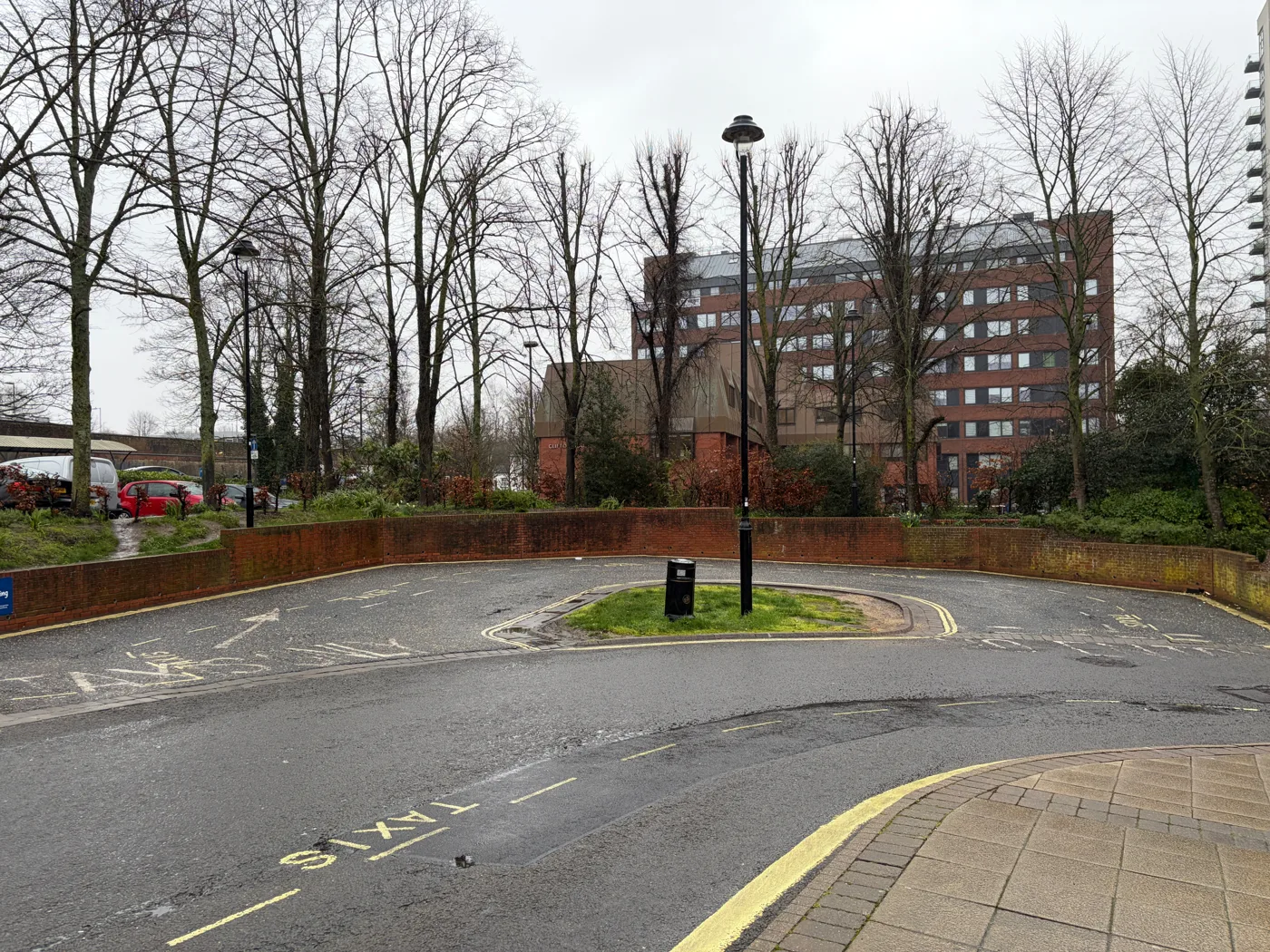

Cabinet turned down drivers' request for 30p more on every fare on 6 October. A two-mile daytime trip stays at £8.20, already above the £7.47 average.
Basingstoke’s taxi drivers asked for 30p more on every fare. On Tuesday 6 October, Cabinet said no. The current fare table stays as it is.
Updated 9 October: Cabinet followed the officers’ advice and refused the rise. The printed decisions were published after the meeting. This story was first published on 2 October, before the vote.
The request covers the borough’s hackney carriages, the taxis you can hail in the street or take from a rank. The council sets the most they can charge. The trade wanted the “drop”, the charge when the meter starts, raised by 30p on all three tariffs. The officers’ report to Cabinet recommends keeping the current fare table unchanged.
What a journey costs now, and what it would have cost
The daytime rate, Tariff 1, runs from 6am to 11pm. These are the maximum fares from the council’s current and proposed fare table:
| Journey | Now | If the rise were approved |
|---|---|---|
| The drop (meter start) | £4.20 | £4.50 |
| 1 mile | £6.20 | £6.50 |
| 2 miles | £8.20 | £8.50 |
| 5 miles | £14.20 | £14.50 |
| 10 miles | £24.20 | £24.50 |
The other two tariffs follow the same pattern:
- Tariff 2, 11pm to 6am and bank holidays: the drop is £5.50, and two miles costs £11.50.
- Tariff 3, Christmas and New Year: the drop is £7.00, and two miles costs £15.00.
- Waiting time is 20p per 30 seconds by day, 30p at night and 40p at Christmas.
- The cleaning charge is £50, £75 or £100 depending on the tariff.
Because the rise would only touch the drop, every journey would have cost the same 30p more. That is 7% on the drop alone but about 1% on a ten-mile trip. The report says this is the main reason to refuse it: short local journeys would take the biggest proportional hit.
Why officers say no
The report accepts that drivers’ costs have gone up. The trade listed fuel, insurance, maintenance, licensing, vehicle replacement and card payment charges. Drivers told the council the last rise before January 2025 came in 2013, and that they would not ask again before reorganisation.
Officers give four reasons for refusing:
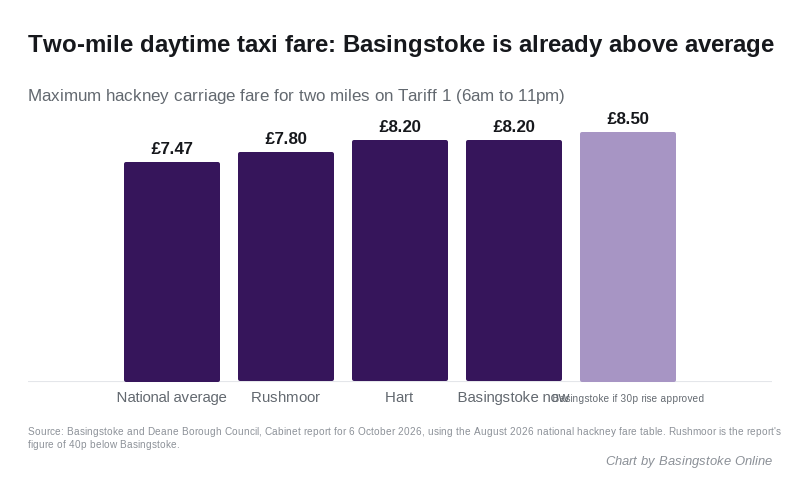
- Fares here are already above average. A two-mile daytime trip costs £8.20 in Basingstoke and Deane. The national average in the August 2026 national fare table is £7.47. That puts the borough 70th of about 341 licensing areas.
- The rise would move the borough up the table. At £8.50, officers expect it would rank somewhere around 36th to 40th.
- No verified figures were supplied. The trade described its costs, but “no independently verified financial evidence” was submitted to back the 30p figure.
- Short trips would be hit hardest. That falls most on disabled and older residents, who rely on taxis for local journeys to the doctor or the shops.
The Licensing Committee first looked at the request on 7 July. It asked whether a percentage rise across the whole table would be fairer. The trade did not put forward a figure, so officers say there is no evidence to set one.
How Basingstoke compares with its neighbours
The report compares the borough with the two councils it would have merged with:
- Hart: the same £8.20 two-mile fare, ranked 75th nationally.
- Rushmoor: 40p cheaper, so £7.80, ranked 118th.
The reorganisation the report relies on has been withdrawn
Part of the case for waiting is that a new North Hampshire council would review fares across Basingstoke and Deane, Hart and Rushmoor. The report says deferring “would enable the successor North Hampshire authority to undertake a comprehensive review”.
That successor authority is not currently planned. On 7 September 2026 the government withdrew its decision on reorganising Hampshire, along with those for Essex, Norfolk and Suffolk. It announced a rapid review of the whole programme. We covered what that means for the borough in our report on the withdrawn merger.
The report does not mention the withdrawal. Its other reasons for refusing the rise do not depend on reorganisation. Cabinet has now followed the advice, so the “wait for the new council” part of it has no date attached.
What Cabinet decided
Cabinet met on Tuesday 6 October. The taxi fares were item 6 on the agenda. It agreed “to retain the current Hackney Carriage Fare Table and not approve the proposed variation at this time”.
The published reasons follow the report. The existing tariff “already exceeds the national average”, and the rise “would have the greatest disproportionate impact on shorter journeys”. Cabinet also weighed passenger affordability, accessibility, equality, other councils’ tariffs and the trade’s sustainability.
The decision record lists the options it turned down: approving the 30p rise, or a percentage rise across the whole tariff. Because nothing changes, no new fare table has to be advertised.
The trade can apply again at any time. The report says the council would welcome a new request “supported by appropriate evidence”.
What it means for you
If you take a taxi in Basingstoke, the fares on the meter will not change this autumn. A two-mile daytime trip stays at a maximum of £8.20, and £11.50 after 11pm.
Christmas and New Year use Tariff 3, where the drop is £7.00. If you are booking a cab home from a party, that is the rate to budget for.
These are maximum fares for hackney carriages only. Private hire firms, the ones you must book in advance, set their own prices. Ask for a quote when you book. If the taxi is the last leg home from London, our train times page has the last trains from Waterloo.
Same agenda, same night: Cabinet also extended the borough-wide dog fouling order for three years, and approved a new source of nutrient credits so housing development can continue in affected parts of the borough.
Have your say